Security failures rarely begin with a single dramatic breach. They emerge through a gradual loss of control driven by misread intent and fragmented coordination.
In travel security, the most fragile moments are pickup and drop-off, where coordination is most exposed. However, every phase becomes vulnerable when close protection officers (CPOs) and drivers are not fully aligned.
The CPO maintains situational awareness and operational context through briefings and intelligence, while the driver controls positioning and movement. When aligned, decisions translate directly into movement. When not, awareness and action fall out of sync, creating operational vulnerability.
This misalignment tends to surface in a few consistent ways.
Failure Point 1: Time collapses
Security incidents are measured in seconds. As a situation develops, hesitation is often the first sign of misalignment.
The CPO reacts to a cue, but the driver does not move immediately, whether due to uncertainty, delayed recognition, or waiting for clearer instruction. The vehicle holds position instead of acting decisively. That gap—often just 2–3 seconds—shrinks options quickly, turning an avoidable situation into one that requires a more aggressive response.
Like an assembly line, a single hesitation ripples through the system as each dependent step is pushed back.
For example, a slight hesitation during pickup, such as unclear positioning, late movement, or missed timing between the CPO and driver, can delay departure by a minute. That delay then cascades: arrivals shift and coordination with other teams degrades.
The risk is not just delay but accumulation. Each small disruption increases the likelihood of further errors until control over timing, and with it the operation itself, begins to erode.
Failure Point 2: Conflicting mental models
Drivers and CPOs often see the same environment differently. The driver focuses on traffic, routes, and constraints, while the CPO focuses on people, intent, and anomalies. Without synchronization, they operate on different “realities.”
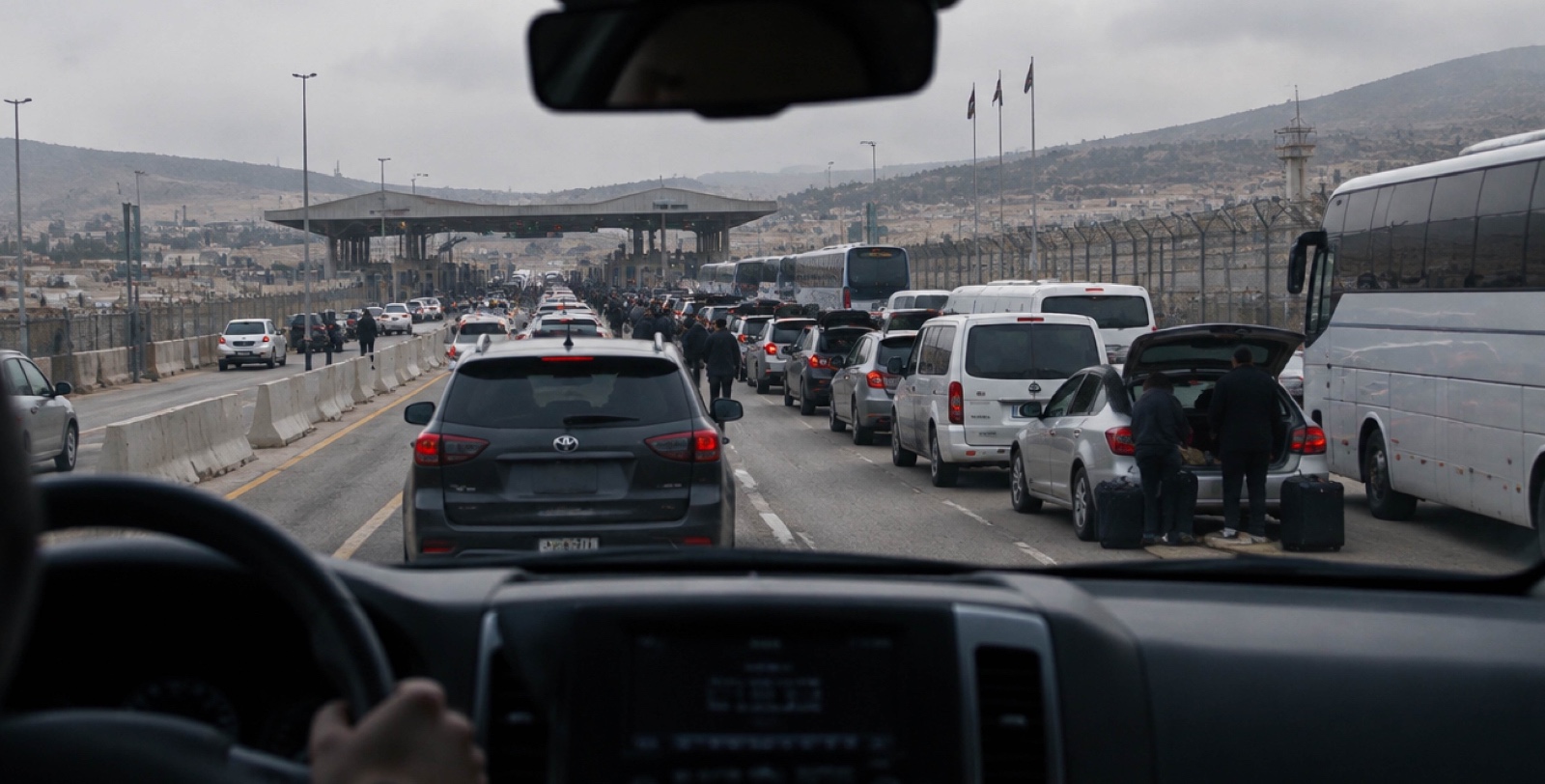
This becomes clear in a simple scenario: the vehicle is moving through busy traffic. The driver is focused on flow; reading gaps, watching signals, and maintaining smooth movement. To the CPO, the same scene looks different: a few vehicles are closing distance in a way that feels deliberate, not random.
The driver reads it as congestion, while the CPO interprets it as a potential attempt to box the vehicle in. Both interpretations may be valid, but they are not shared.
Without a common threat picture, decisions begin to diverge. In convoy operations, even small gaps in interpretation disrupt spacing, timing, and extraction.
Failure Point 3: Communication overload or silence
Misalignment often produces two extremes.
- On one side, there is over-communication. As uncertainty rises, the CPO fills the space with constant instructions: “Slow down.” “Switch lanes.” “Take the next turn.” Each may make sense in isolation, but together they overload the driver. Instead of reading the road and anticipating movement, the driver reacts step-by-step, with attention split between traffic and instructions.
- On the other side, there is under-communication. Assumptions replace clarity: the driver expects the CPO to call out risks, while the CPO assumes the driver already sees them. As a result, key moments pass in silence, not because nothing is happening, but because each is waiting on the other.
In both cases, coordination breaks down. One reduces the driver to a pair of hands awaiting commands; the other leaves gaps where decisions should be shared. Effective teams avoid both extremes by relying on predefined triggers and protocols, so action does not have to be negotiated in the moment.
Failure Point 4: Broken contingency planning
Pre-mission planning is where alignment is supposed to be built; routes, choke points, alternative exits, roles during contact. But when teams are misaligned, these plans exist only on paper.
In practice, the driver hasn’t fully internalized alternate routes, while the CPO assumes he has. Nothing feels wrong, until something actually goes wrong. Then, instead of executing a shared plan, both are forced to improvise in real time.
In a moving security environment, that improvisation is unstable. Planning should not be treated as a briefing checklist, but as a shared mental map they can both act on immediately.
Failure Point 5: Misaligned authority and judgment
In practice, the CPO provides the operational picture, while the driver translates it into movement. Problems arise when this distinction is either unclear or resisted.
Sometimes drivers believe they understand the situation well enough to question or override instruction. This is rarely malicious, but it comes from confidence or incomplete awareness of the full picture. For example, a driver may resist a CPO instruction to avoid a controlled entry point or adjust convoy movement, assuming their understanding of procedure is sufficient.
The issue is not necessarily disagreement but misplaced certainty. The driver acts on incomplete information, while the CPO cannot afford to justify decisions in real time.
When this happens, coordination becomes negotiation, and alignment breaks when it matters most.
Practical Guidance
These operational guidelines help prevent the failures outlined above:
- Drivers assigned to security operations must already function as security drivers, with an understanding of team roles and a situational lens aligned with the CPO. This is not something developed during the mission.
- Pre-mission briefings must be structured and given sufficient time to define roles, hierarchy, and decision authority, including final decision-making, so execution does not turn into discussion.
- A zero-tolerance approach to personnel is required. Individuals who are not team players, or who introduce friction through hesitation, negotiation, or failure to integrate, must be replaced without delay. A ready pool of qualified replacements is essential to maintain continuity.